Running Agent Tasks in Response to Inbound Events vs Fixed Schedules
October 13, 202610 min read2,210 words
Text: Priya Nambiar
Event-driven triggers cut latency and idle cost where polling and schedules cannot.
Picking the wrong way to trigger an agent means no amount of tuning afterward fixes it. The trigger model sets three things at once: how fast the agent can respond, how much it costs to run while waiting, and how it fails when something goes wrong. None of those three can be patched in later without rebuilding the thing.
Take latency. In a polling setup, the response time is the polling interval, full stop. At real scale, those empty checks add up to real cost, whether or not there was ever anything worth acting on.
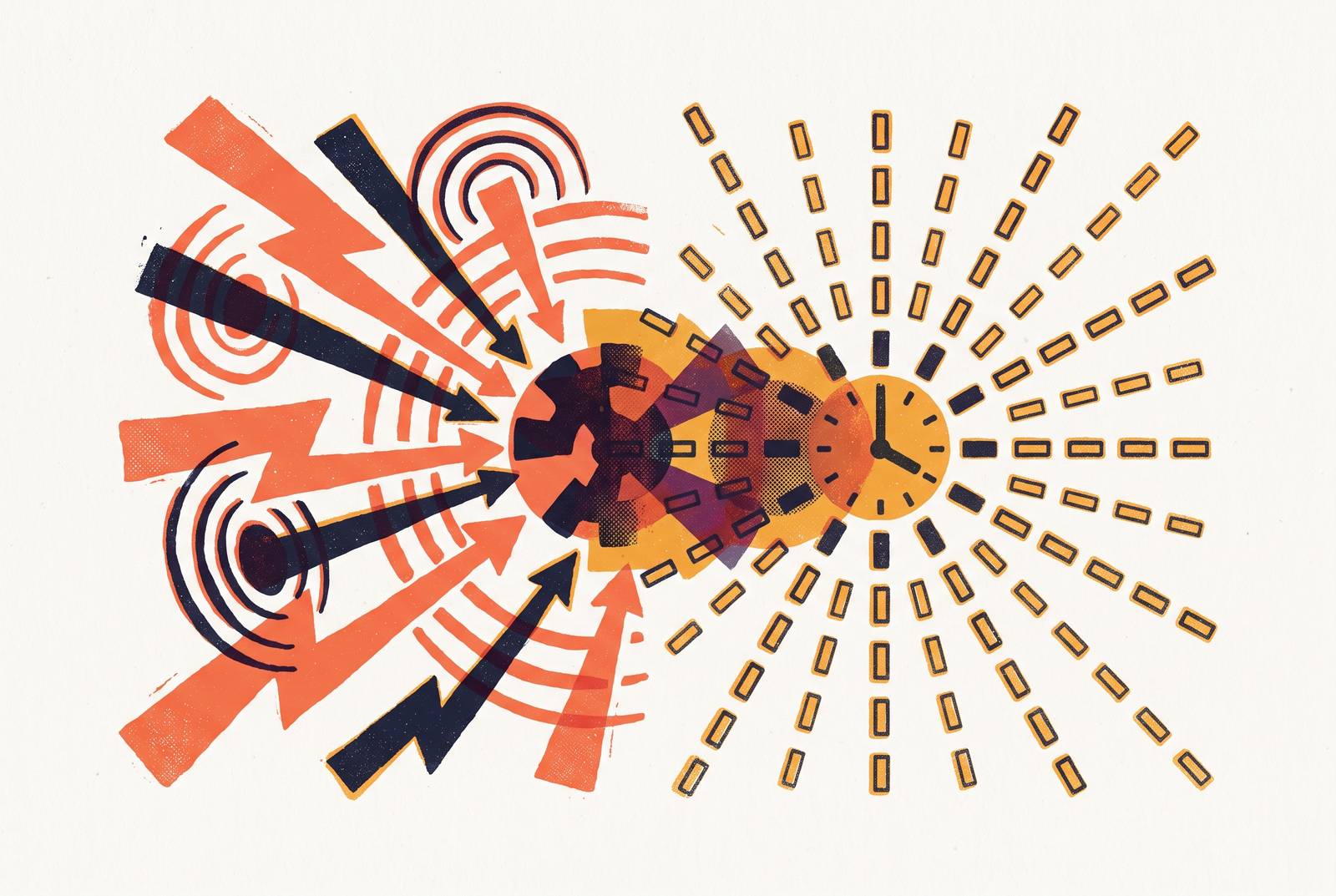
Event-driven triggers get rid of both problems at once: no polling-interval floor on latency, no cost while idle. Schedules exist for a different kind of task.
The decision rule is simple to state and easy to skip: what latency does this task actually need, and can the system it's hooked into reliably emit events when something happens? Answer both before picking a model, not after.
How polling, scheduled execution, and event-driven triggers work
These are three separate mechanisms with three separate runtime contracts. Treating them as flavors of the same idea is how teams end up with agents that are slow, expensive, or both.
Polling means the agent checks a resource, a database, an inbox, an API, on a timer, and acts if something's changed. The timer lives at the infrastructure level. It has nothing to do with how urgent the task actually is.
Scheduled execution runs the agent at a set time or interval, whether or not anything happened in the world that would call for it. The trigger is a clock, not a reaction to anything. A daily digest agent doesn't care if the day was quiet or chaotic. It runs at 9 a.m. either way.
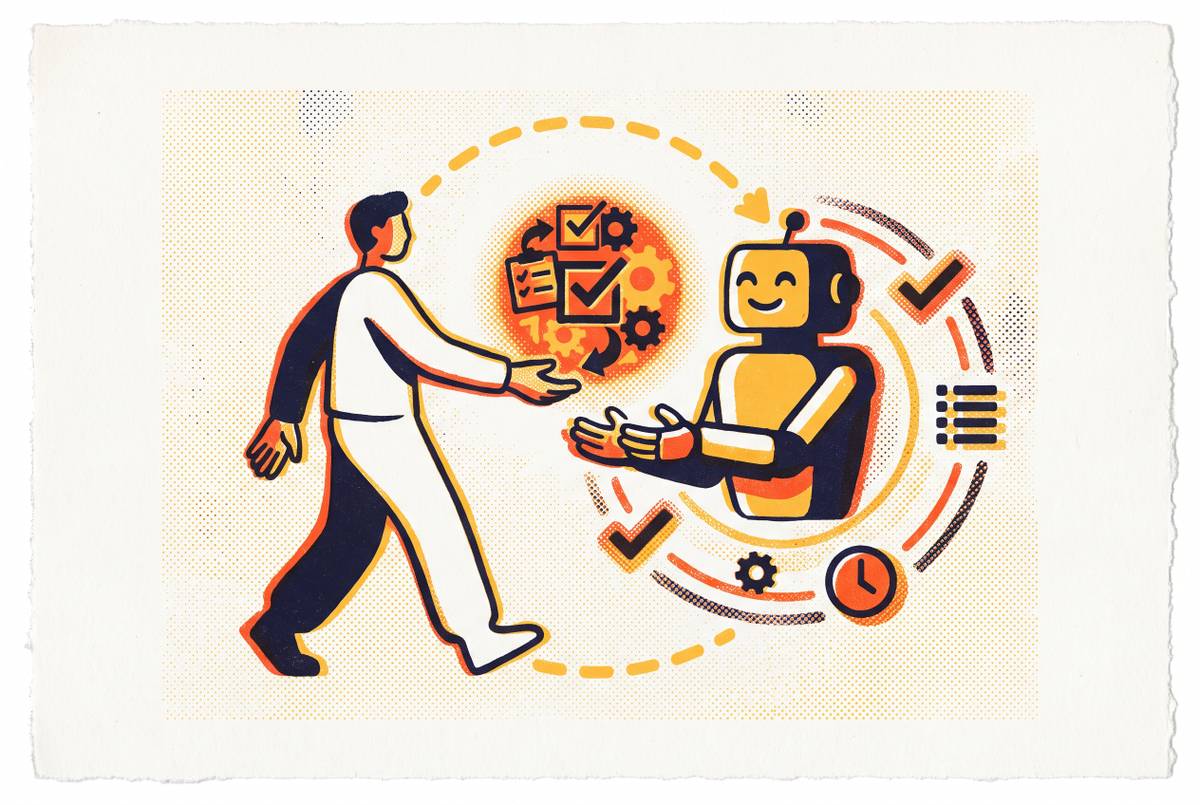
Event-driven triggers work differently. The agent sleeps until the system wakes it up. Compare that to polling, where the agent is always awake, constantly checking whether there's a reason to be awake.
The gap in practice is sharp. In a polling setup, a downstream agent checks every 30 seconds whether a pipeline run finished. In an event-driven setup, the pipeline fires a "pipeline.completed" event the moment it's done, and every subscriber gets it within milliseconds, not within half a minute.
What scheduled execution is good at, and where it breaks down
Scheduled execution is the right call for proactive work, work tied to a specific point in time, and work that needs a full period's worth of data before it means anything. Daily reports, cleanup jobs, digest generation, trend analysis that only makes sense once a full day has passed, these are jobs that want a clock, not a listener. Most production agents end up running on some kind of schedule for exactly this reason: the clock isn't just plumbing, it's part of how the agent thinks about its own work.
There's a wrinkle that makes scheduling harder than it looks. Designing the schedule means designing for memory across runs from the start.
Practitioners lean on a handful of patterns to manage this. A cron pattern fires at a fixed time, say daily at nine, and works well for reports and cleanup, as long as the agent can pick up context from its last run. And daisy-chaining aside, plain event-driven triggers serve as the main alternative to all of this, covered in the next section.
Scheduling breaks down the moment the triggering condition can happen at any time. The agent still responds. It's just always a little late.
What event-driven architecture requires to work in production
Event-driven systems get near-zero latency and cut out idle compute almost entirely, but they ask for three layers of infrastructure that a polling setup never needed. Underestimating that complexity is the most common reason teams give up on event-driven halfway through.
The three layers are event infrastructure, the agent runtime, and a governance layer. Event infrastructure means a message broker and a schema registry, the thing that stores, orders, and delivers events. The agent runtime is where agents subscribe to topics, process what comes in, and emit their own events back out, each running a non-blocking loop so one slow event doesn't hold up the next one in line.
The governance layer is the one teams skip, and it's the one that causes the most pain later. Without it, an event-driven system turns opaque fast: things are happening, but nobody can say what, when, or why. That opacity becomes visible in an incident at 3 a.m. during an incident, when someone needs to trace an event back to the agent that mishandled it and there's no record to follow.
Schemas make the whole thing work as a system. A "data.quality.alert" event, for instance, carries an asset ID, a quality score, and the affected columns, enough for any subscribed agent to act without having to query back for more context.
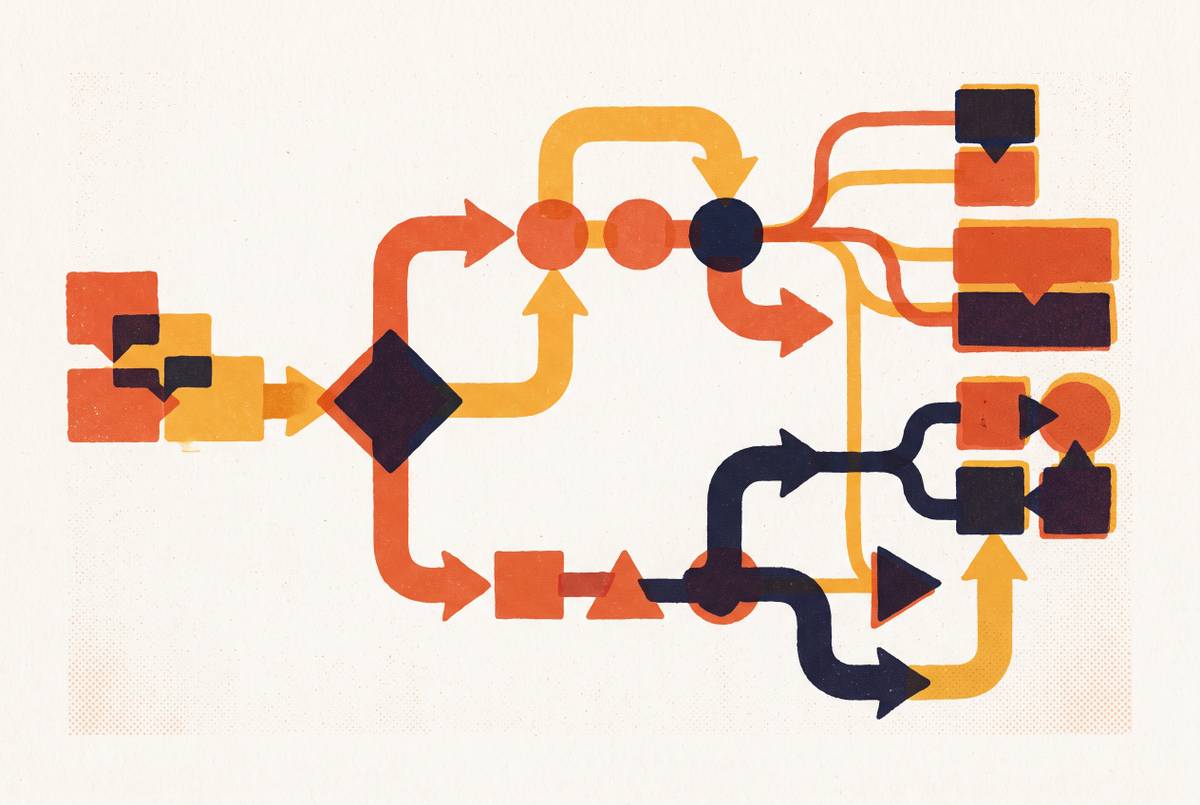
Multi-agent systems built on events tend to fall into four coordination patterns. Event chaining has one agent's output trigger the next in sequence, which is easy to debug because each step is a discrete, auditable unit, and it's the dominant shape for structured, multi-step agent workflows. Saga orchestration covers long-running workflows, where a coordinator fires sequential events across agents that might take seconds or hours to finish, and any step can fail without breaking the whole thing.
The decoupling of producers from consumers is what gives this architecture room to grow: a new agent can subscribe to a topic without anyone touching the code of an agent already running. It shouldn't be waved away. But the complexity is front-loaded into schema design, broker setup, and observability, done once, rather than recurring every day as idle compute, latency debt, and polling that quietly falls apart as volume grows.
Where each trigger model fails in production
Each model breaks in its own recognizable way, and knowing which failure applies to a given task shapes which model you pick for that task.
Scheduled execution tends to fail in four ways. Context collapse happens when the agent runs on schedule but has no memory of its last run, so it re-processes the same data, sends the same notification twice, or misses a trend that only shows up across multiple runs. Language models can hang. Scheduled jobs need strict timeouts: without one, a job that gets stuck at 2 a.m. keeps burning credits until someone happens to notice. And idempotency failures happen when the agent isn't built to handle running twice on the same data, missing a deduplication check and sending or writing things twice.
Event-driven setups fail differently. Missing observability means a backed-up queue looks perfectly healthy right up until it cascades, because nobody was watching event lag.
If a task needs a response within seconds of something happening in the real world, event-driven is the structurally correct choice, and scheduling will always serve it late. If a task needs accumulation, comparison across time, or proactive output that no single external event triggers, scheduling is the right call, and event-driven buys nothing extra.
How production systems combine both models
Most production agent deployments aren't purely one or the other. An always-on listener handles inbound signals, a customer message, a CI failure, a file upload, with near-zero latency, while a scheduled job handles the accumulation work, a daily digest, a weekly trend report, nightly cleanup, that only makes sense once a full period's data is in. That combination is the shape most real systems actually take.
Production agents don't sit around waiting for a convenient check-in time to react. All of that is event-driven work. The weekly performance summary that runs regardless of whether any threshold tripped that week is scheduled work, and it stays scheduled work on purpose.
Adaptive scheduling sits in between the two, and it's the most interesting pattern in the whole mix. An agent that sets its own next run time based on what it finds isn't purely reactive and isn't purely clock-driven either. It adjusts its own cadence to how much signal is coming in, which fits monitoring agents especially well, since quiet stretches and busy stretches don't arrive on any predictable schedule.
The seam between the two models is where state management does the real work. Daisy-chain orchestration is itself a hybrid form in disguise: an event starts the first agent, and that agent's completion event kicks off a downstream step that behaves more like a scheduled job, reactive going in, time-bound once it's running.
Memory architecture is where production failures tend to start. In-context memory is fast but limited, and writing agent progress to durable storage at defined checkpoints is the more dependable approach for anything long-running. Platforms built specifically for scaling per-customer agent instances need to support mixing trigger models inside a single agent, so each deployed instance runs under the contract its owner actually needs.
A hybrid system needs two kinds of monitoring at once: event-level instrumentation on the reactive side, run-level instrumentation on the scheduled side. Mix the two together and you get dashboards that look fine while half the system is quietly falling behind.
Wiring inbound events to a production agent using existing integration infrastructure
The hard part of going event-driven usually isn't the agent's own logic, but authenticating to, subscribing to, and keeping a live connection with every service that produces the events, and integration platforms built for exactly this have largely already solved that problem.
Real events come from real services: a GitHub issue opens, a Slack message lands, a Gmail message arrives, a WhatsApp message fires off a webhook. Every integration becomes its own small project, eating engineering time that could go toward the agent itself.
Composio's trigger model is built to remove exactly that tax. As of August 2026, the catalogue covers more than 1,500 toolkits and more than 20,000 individual tools, all reachable through a single MCP endpoint. Composio also holds SOC 2 Type II and ISO/IEC 27001:2022 certifications as of August 2026.
Simpler event sources don't need a full broker. Hermes v0.20, "Herald," shipped HMAC webhooks natively, giving authenticated outbound event delivery: the agent can check that a payload actually came from the producer it expected before it acts on anything inside it.
Trigger Model Choices at Scale
One agent with the right trigger model is an engineering decision. A thousand customers, each needing their own agent provisioned with the right trigger model, monitored, and recovered independently, is an operations problem, and it's the one that decides whether the business holds together.
Per-user agent isolation is the right unit to scale around: each customer's agent should run in its own sandbox, with its own event subscriptions, its own scheduled jobs, and its own state, kept apart from everyone else's. Letting that bleed between customers is both a reliability risk and a compliance one. And the work that trigger models generate doesn't stop at setup. Subscription management, credential rotation, event-lag monitoring, recovering scheduled jobs after a failure, checking state checkpoints, these recur for every single customer instance, not just once at launch.
These architectural tradeoffs, the latency floor, the compute cost, the failure behavior, can't be bolted on after an agent is already live for a customer. They have to be set at provisioning time. Managed platforms like Agent37 handle this by letting the trigger model get specified right at deployment, so the infrastructure actually matches what the agent needs to do from the moment it goes live for that customer.
Agent37's Cloud API is built around this exact problem: a single API call spins up an isolated, persistent, per-user sandbox, each one carrying its own filesystem, memory, and connected tools, with the platform handling infrastructure, routing, and streaming underneath. That means a founder isn't standing up and babysitting a separate runtime every time a new customer signs up. For an operator running a white-label agent product, every new customer gets their own private, persistent, branded agent, activated automatically at onboarding, with the trigger model, event-driven, scheduled, or hybrid, set once at the product level and applied to every sandbox from there.
Scheduled execution carries its own operational weight here too: it's how agents hold onto episodic continuity across runs without needing a constant live connection or expensive always-on compute. For a founder running a per-customer agent model at scale, scheduling becomes the backbone of stateful behavior, each customer's agent waking on its own cadence, recalling what it learned last time, and acting on what's accumulated, instead of requiring constant connectivity just to stay coherent.
The security properties that matter at this scale are concrete: encryption in transit and at rest, sandbox isolation enforced at the kernel level through gVisor, and SOC 2 Type I certification, with a report available on request and Type II in progress. That's compliance work a self-hosted team would otherwise have to build from scratch, included instead. One-click deployment covers agents including Hermes, OpenClaw, Claude Code, Codex, OpenCode, and Grok, starting at $3.99 a month, so everything in this piece is a configuration decision on a system that's already running.
The founder's time is best spent designing the trigger model that actually fits the customer's workflow, sharpening the agent's task performance, and selling the product, not manually provisioning event subscriptions, rotating tokens, or nursing crashed scheduled jobs back to life for every account that signs up.