Data Privacy Defaults to Verify Before Your Agent Processes Emails
September 10, 202611 min read2,377 words
Text: Priya Nambiar
Agents reading your inbox can access everything in it unless you explicitly limit their permissions.
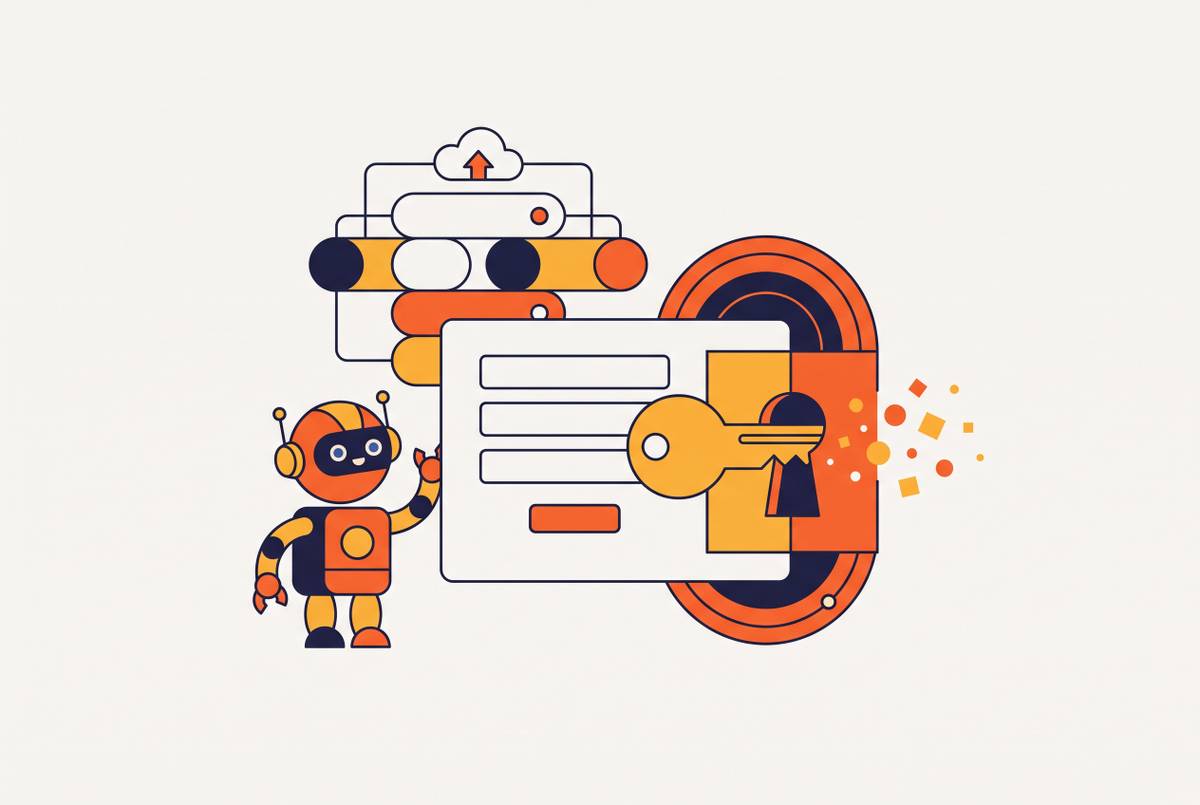
An AI agent that reads one verification email in your inbox usually has the technical ability to read every other email in that inbox too, and depending on the scope granted, potentially much more besides. That gap between what an agent needs and what an agent gets is the whole story here. Operators and founders handing an agent inbox access are making a call that carries legal weight, not just a technical config choice, and most of them are making it without a checklist.
What agents actually inherit when you hand them inbox access
An agent's working memory at any given moment holds the original request, whatever records it pulled, the last several turns of conversation, results from any tool it called, and its own intermediate reasoning. None of that sticks around unless something is logging it on purpose. That's worth sitting with: the agent might have touched sensitive data and left no trace, simply because nobody built a logging layer to catch it.
Now pair that with how OAuth grants actually work. A standard "read mail" scope from Google or Microsoft doesn't hand over a filtered slice of the mailbox. It hands over the mailbox. Full stop. So when a founder wires up an agent to check for a one-time password, the agent isn't looking at one email, it's sitting on top of the entire account with permission to read all of it.
IBM's 2025 research put a number on the accumulation problem: 90% of agents running in enterprise environments carry excessive privileges. Obsidian Security's CISO Playbook for 2026 found nearly 40% of agents assessed carry medium-to-critical risk factors, which tells you this isn't some rare misconfiguration, it's closer to the default state.
An arXiv study by Wu and colleagues, published in November 2025, made an argument worth repeating: conventional permission models just don't fit agentic systems. The researchers drew a comparison to early mobile app permissions, back when an app asking for "contacts and camera access" to send one text message felt normal, and proposed an ML-based framework to predict data-access decisions instead. Their underlying point is that users routinely misjudge what they're actually granting. And the problem isn't purely architectural. The Cloud Security Alliance found in 2025 that 38% of employees share confidential data with AI platforms without any approval process at all. Some of this is bad design, some of it is just people moving fast and not reading the scope screen.
The regulatory meaning of "verify before processing" and who is liable
GDPR's Article 25 sets out data-protection-by-design: privacy has to be considered before a feature ships, not patched in after something goes wrong. Articles 13, 14, 15, and 22 go further and require explainability. If a user asks why their email got flagged or sorted a certain way, the system needs to give a real answer a human can understand, not a shrug.
The fines are not abstract. Penalties run up to 4% of global annual revenue, and European data protection authorities have pursued enforcement actions at scale across the continent. The EU AI Act adds another layer on top: it became applicable in August 2025, and the high-risk system obligations took full effect on August 2, 2026. Some email-processing agents now fall under that high-risk category, which triggers risk management requirements, formal conformity assessments, and mandatory human oversight. Miss those and the fines climb to €35 million or 7% of global turnover, whichever is bigger.
None of this is theoretical enforcement, either. On March 19, 2026, the European Data Protection Board opened a Coordinated Enforcement Action, with 25 national authorities reaching out to organizations over GDPR Articles 12 through 14, the transparency and information rules. Meanwhile AI agents have been sitting inside context windows processing personal data since the day they got deployed, whether or not anyone documented it.
There's exposure on the US side too. US state privacy laws have continued to expand in scope, and organizations deploying agents that process employee, contractor, or business-contact data should verify their obligations under applicable statutes.
Here's the part founders get wrong most often: if you deploy the agent that reads, sorts, or sends the email, you are the data controller under GDPR. Not the agent. Not the LLM vendor. Not whoever hosts the thing. The agent is a processor acting under your instructions, and liability sits with you. IBM's 2025 numbers show 63% of breached organizations either had no AI governance policy or were still writing one when the breach happened.
The email-specific threat that makes prompt injection uniquely dangerous
Phishing itself has changed shape. The 2025 Phishing Threat Trends Report found a large majority of phishing emails now contain AI-generated components, producing messages personalized enough to look like they came from someone the recipient actually knows.
But the sharper risk for agent-connected inboxes is prompt injection buried in the email body itself. A message can carry hidden instructions, text a human would never notice, that tell the agent to pull data out, approve a transaction, or skip a review step it was supposed to enforce. Unless the agent is sandboxed to treat email content as untrusted input, it just follows the instructions like they came from the user.
Security researchers have shown the mechanism concretely: an agent asked to summarize a document processes hidden text inside it instructing the agent to read a local credential file and fold the contents into its response. Without filesystem isolation, the credential walks out the door inside the agent's own output. Apply that same logic to email authentication flows in a wallet-linked or financial context, and an agent could end up intercepting one-time passcodes or approving transactions it was never supposed to touch.
IBM's 2025 report found breaches involving unauthorized AI tools cost an average of $4.63 million, about 4% above the global breach average of $4.44 million. That premium exists because agent-driven exfiltration doesn't look like an attack to traditional data-loss-prevention tools. The access pattern looks completely normal, because technically, it is normal access, just used for the wrong purpose. Ninety-seven percent of organizations that suffered an AI-related breach, per the same IBM report, lacked proper AI access controls going in.
The permission checklist: what to verify before any agent touches the inbox
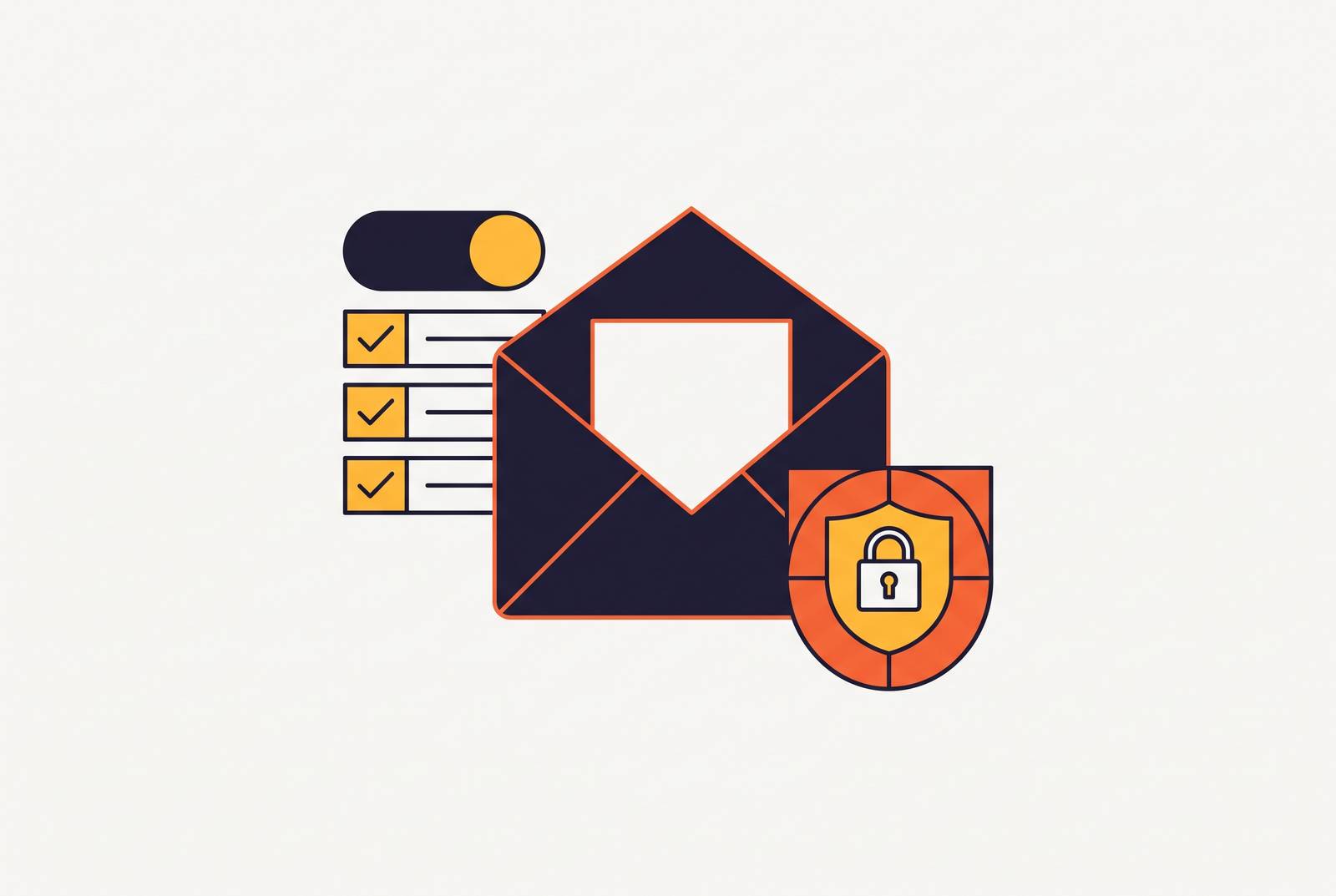
Scope the OAuth grant down to the minimum the agent actually needs. Skip account-wide "read mail" access when the task only calls for one label, one sender, or one thread type. Gmail's label-scoped access and Outlook's folder-level permissions exist for exactly this. Write down which scope got granted, when, and why, because that documentation is precisely what the EDPB's enforcement action is asking organizations to produce.
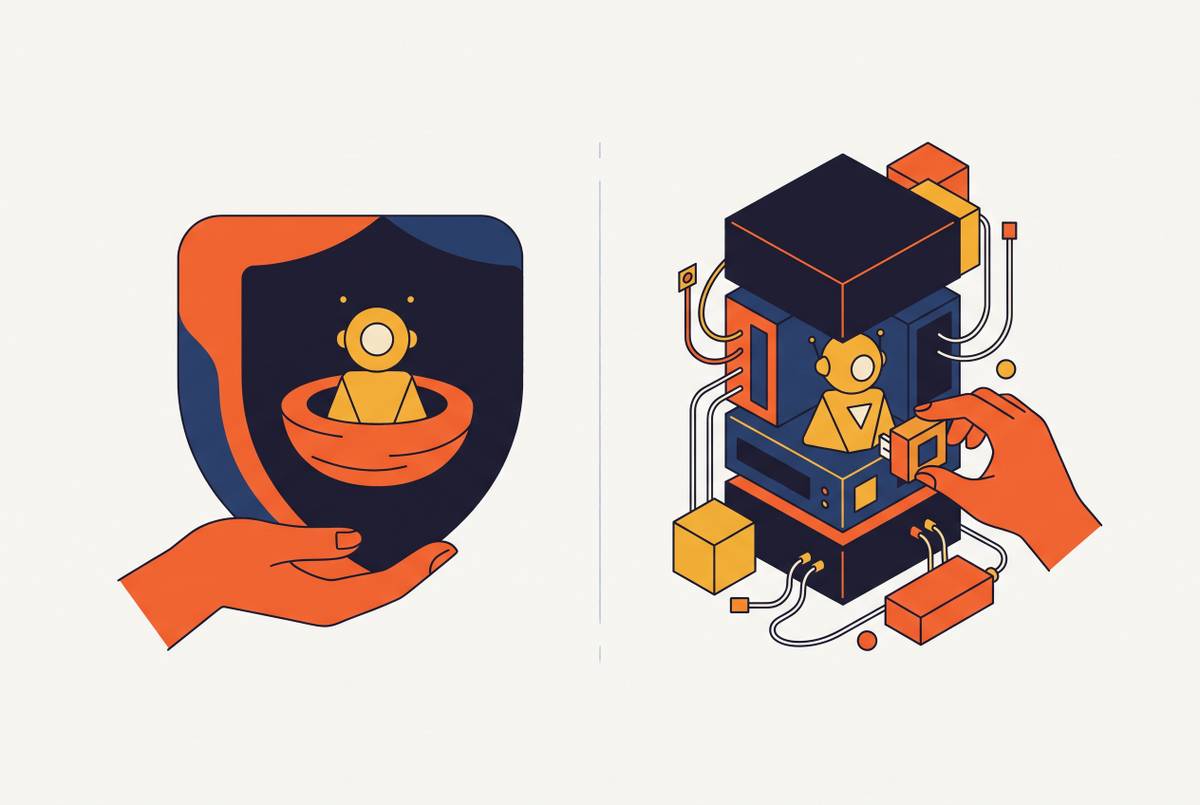
Confirm the agent runs somewhere isolated, not inside a shared environment with other users' sessions. Each instance should get its own disk, its own network boundary, its own credentials. That isolation is what limits the blast radius when something goes wrong: a compromised instance shouldn't be able to pivot sideways into a different user's mailbox. Check for pause and resume support, snapshotting, and scale-to-zero on idle, so an agent nobody's using isn't quietly sitting there as an attack surface.
Lock down outbound network access to an explicit allowlist. Default to none, then add only the APIs the agent demonstrably uses. An agent drafting a reply or filing a support ticket has zero legitimate reason to call an arbitrary external IP address, so any such call is a signal something's wrong, either a compromise or an injection attempt. Log every outbound request at the sandbox level, not just wherever the application happens to log things.
Ask the platform, directly, what happens to email content once a session ends. Is it stored? Does it feed into fine-tuning or retraining anywhere? The Wu et al. study found users routinely misjudge what they are actually granting an agent, which means this can't be left to assumption. It has to get verified at the contract level. The data processing agreement should explicitly rule out using email content for model training. For healthcare, legal, or financial use cases, check for SOC 2 or a HIPAA business associate agreement before connecting anything.
Build a human checkpoint into any action beyond reading. Reading email and acting on it are different permission tiers entirely, so sending, deleting, labeling, or forwarding should all require a person to sign off first. A review queue that holds agent output until a human approves it is the practical, working version of the EU AI Act's human oversight requirement. Worth noting: the Wu et al. permission model hit 85.1% accuracy overall and 94.4% on its high-confidence predictions, which sounds strong until you remember that still leaves real error. Human review is what catches the rest.
Keep immutable, encrypted logs of every action the agent takes on the inbox: every read, every label, every message sent, every API call, logged at the sandbox level. Retention windows vary by regulation and sector. The EDPB's 2026 enforcement action targets the transparency and information obligations under GDPR Articles 12 through 14, centering on whether organizations can demonstrate how personal data was processed. The log is the only acceptable answer.
Have a real process for revoking credentials the moment an agent gets deprovisioned. Agents tend to run on long-lived API tokens, so when a user offboards, the OAuth grant and any stored credentials need to die immediately, not eventually. Confirm the hosting platform actually surfaces a revocation workflow, rather than just an account-deletion button. Under CCPA/CPRA, deletion requests must be fulfilled within the timeframe the regulation specifies, and if an agent's credentials remain alive past that deadline, the operator is already in violation.
How integration layers like Composio change the permission surface
Composio, founded in San Francisco in 2023 and having raised tens of millions of dollars (including a substantial Series A led by Lightspeed around July 2025), stores each user's OAuth credentials inside what it calls "connected accounts," so an agent can act as the right person without a developer ever touching a token directly. That's the appeal: Gmail, Google Drive, Outlook, Slack, GitHub, and hundreds of other apps connect through managed authentication instead of manual handling.
But it also means the permission question moves. Once a connected account holds Gmail credentials, any agent task that reaches for Composio's Gmail toolkit gets whatever scope that original OAuth grant covers. So the scope needs verifying at the connected-account level, not just wherever the agent task gets configured.
Composio's meta-tool setup, its COMPOSIO_SEARCH_TOOLS function, lets an agent search for the right tool semantically at runtime. Useful, but it means the actual set of tools an agent might invoke isn't fully knowable at configuration time. That's exactly the condition that breaks conventional install-time permission models: you can't grant access up front to a scope you don't yet know you'll need.
Composio offers self-hosting for teams that need tighter control over data residency or network boundaries, relevant for anyone under GDPR localization rules or a strict data processing agreement. Anyone using an integration layer like this should extend the checklist: audit every connected account, every scope it holds, every agent allowed to invoke it, and confirm that revoking one user's agent access actually revokes the underlying connected-account credential too, not just the agent's ability to call it.
What to look for in a hosting platform's security posture before connecting an inbox
Encryption in transit and at rest is the floor, not something to be impressed by. Ask for documentation, not a claim on a marketing page.
SOC 2 Type II, completed or in progress, is a meaningful signal of operational security discipline for a platform touching email content. Type I only proves the design looks right on paper; Type II covers whether it held up in practice over time.
A platform should be able to produce a security page, a documented incident response process, and a clear data processing agreement without hesitation, because those are the kinds of artifacts regulators scrutinize when investigating transparency and data-processing obligations. If a vendor can't hand those over on request, treat that as a failed check, not a minor gap.
Per-user sandbox isolation, one agent, one disk, one URL per user, should be enforced at the infrastructure level, not just described in a pitch deck. And check whether human-in-the-loop review exists as a dashboard feature that can be set as a default, not an optional toggle buried three settings menus deep, since enforcing it as a default is what makes human oversight practical rather than theoretical.
Read the platform's privacy policy for one specific sentence: email content processed by agents is never used to train or improve models. If that sentence isn't there in some form, assume the opposite is allowed. And if the platform lets operators run agents under their own brand, white-labeled so end users never see the underlying vendor, remember the operator still carries controller liability. Verify the data processing agreement flows all the way through to the underlying vendor's actual practices, contractually, not just by assumption.
Look for a zero-trust posture: least privilege as the default setting, continuous authentication for agent identities instead of a token that lives forever, and some form of behavioral anomaly detection sitting behind the perimeter controls, not instead of them.
Running the checklist as an ongoing practice, not a one-time setup step
The EDPB's 2026 enforcement action is aimed squarely at organizations that set up AI processing once and never looked at it again. The question being asked isn't whether compliance existed at launch. It's whether the organization can demonstrate it's still true today.
Permission drift happens quietly. Every new Composio connected account, every new Gmail label, every new Slack channel added to a workflow expands what the agent can effectively do, without ever triggering an explicit re-authorization step. Treat permission audits like certificate renewals: quarterly, scheduled, non-negotiable.
The Wu et al. research offers one useful data point here. Even with zero permission history to work from, their prediction model still hit 66.9% accuracy, and adding just one to four training samples pushed that up by 10.8%. The takeaway isn't that automated prediction solves the problem. It's that permission decisions are learnable, contextual, and specific to how a given agent is actually used, which is precisely why a one-time setup checklist was never going to be enough on its own.